Tuesday, January 27, 2009

A few reflections on humankind's seemingly irrational motives


I am now at a turning point in my life. This requires me to make several crucial choices that will irrevocably determine my future endeavors. However insignificant in the greater order of things, my current status inevitably draws me towards making a number of conclusions about life in general and about my own trivial self.

Ever since adolescence, I’ve held a sceptical conviction towards other people’s motives. A headstrong attitude if you like. The traditional expectations, hopes, and beliefs of others have never corresponded to my own somewhat divergent point of view. One such important default behavioural trait of ordinary people is the need for attention.

It comes as no surprise that most dysfunctional people commit the cruelest of atrocities due to a lack of acknowledgement of their existance by others. Humans crave a mirror that reflects and confirms their being. Without it they lose their frame of reference and run the risk of going berserk. It is no mere narcissism; rather a way to position themselves in their environment. As humans are essentially social creatures they feel the need to ‘fit in’ lest they be rejected and fail to survive - the absolute and fundamental underlying purpose of our genetic code. This characteristic can be observed in many aspects of life. Salespeople and communication experts widely agree on the beneficial effect of copying a client’s posture when engaged in negotiation. Likewise, affirmative linguistic usage when taking menu orders or summarizing a client’s wishes and/or point of view similarly results in better tips and higher rates of success. It is so ubiquitous that it manifests itself throughout an entire lifespan. One might even suggest it fuels our life, since without the desire for confirmation human relations as we know them would be completely different, unimaginable even.

The unbridled ambition of people illustrates this wonderfully. Ambition is a means to get attention, respect and widespread recognition by other people. The 20th century invention of celebrities epitomizes this point especially. Celebrities thrive on their fame to stay successful, despite their countless gaffes or offenses in life. This ostensibly paradoxical situation whereby people interest themselves in people higher up on the hierarchical ladder (cf. royalty) can simply be explained by the attention-whoring of said celebrities. People react positively to it, and the celebs know it well enough. These observations lead me to consider the deeper cause of the affectionate desire for recognition, being evolution. Exactly like apes humans try to survive in group environments. Because it is more efficient and more beneficial to group survival, individuals are not on equal levels. Each one receives its proper amount of attention, status and level of reputation, whereby the individuals more fit to lead (and procreate) rise up the ranks. Similarly in our society, the intrinsic value of a beggar is no more than that of a king as they both play a role in a world we all perceive more or less in the same way; nevertheless, we devote more attention to the latter, and nobody really disputes it. It’s human, and therefore accepted.

This focus on attention in a human’s life is apparent in the desire to start a family, to have kids, a good job, house and a spotless reputation. A spouse and kids by default offer unquestionable affirmation. All these possessions lead to a ‘good and comfortable life’. Throughout most of mankind’s history and in nearly all cultures, tradition ensured that everyone was able to achieve this to some extent. Of course, people brought up in humbler societies could not aspire the same targets as offspring of the nobility. People gauge their success relative to their starting positions. A farmer becoming a foreman will be equally happy as an aristocrat becoming chief engineer of a large factory. Nowadays in western society, with the stress on taking life in your own hands, offering more opportunities but also more responsabilities and risks, recognition is less ensured than it was before. Michel Houellebecq describes this eloquently in most of his oeuvre. People in western society desperately lack love and a tender carress (symbolizing, at least in my view, absolute recognition of eachother). It preludes the downfall of our culture. While I’ll not venture in his realm entirely, he does have a point: many people find it hard in this rapidly changed world to ‘fit in’. Adolescents attempt to adhere to the latest fads, people cling on to idolatry of celebrities and royalty while they writhe away in misery and pointlessness themselves. Their search of attention and recognition masks their meaningless life. Either they’re too ignorant to grasp the idea or they don’t want to face this consciousness.

Life itself is meaningless. Realizing this scares a lot of people. Subconsciously people have a profound desire to give meaning to life because it is hard to accept your own insignificance. If it were to be a default understanding, people would find it harder to try and survive - due to the lack of a raison d’être. Evolution dictates we can’t have that since it automatically selects the optimal survival strategy in a given situation and environment. Having evolved to be sentient beings, a new layer of complexity is therefore added to ensure we do our utmost best to find the best mate and procreate. Caring and attention had already evolved to provide for small children when humanoids were not yet sentient like we are today. Evolution decided that we would improve our chances of survival if we generated more brain mass. In contrast the offspring needed more time to grow since the size of the head compared to the rest of our baby body resulted in humanoid babies becoming easy prey for predators. The family unit was the logical consequence. As our brain grew more complex, our understanding of the world and ourselves greater, and our consciousness evolved towards our current status, the need for a meaning to life increased. The process of a complex system of attention and recognition thus became a side-effect of an evolution that was started by the need of something else - larger brains and more caring in order to survive. This theory of a side-effect has been proposed elsewhere with respect to religion by Richard Dawkins (in ‘The God Delusion’) and I subscribe to it wholeheartedly.

To illustrate his theory on how religion originally evolved, using the evolution theory, I’ll shortly elaborate on it here. Religion today is a very complex matter, and it seems to be hard-coded in the human brain. Just about every culture and tribe in the world has some sort of religious tradition. This does not entail religion being true per se; rather it suggests that it evolved into religion as we experience it today. Because it is so ubiquitous, we need to search for a time and place when all humanoids were still interdependent (so religion or God couldn’t have originated 6000 years ago, because Aboriginals in Australia for example became isolated from the rest of humanity many thousands of years before. This implies the common emergence of religion is much older, since Aboriginals too have a sense of religion). Simultaneous with the evolution towards larger heads and more caring and attention, children were required to listen to their parents. As they were weak and defenseless, they had to be protected by their elders. The only way to do this was to make sure children did what they were told. So they were told fictional stories to scare or to inspire them, to find ways to make them listen to parents or tribe elders. As a side-effect to this trait in children, religion gradually came into being. Parents invented a narrative for the children, and these children passed it on to their children and so on. Incidentally, this effect proved useful for individuals to keep the group together; as I have pointed out earlier, like individual evolutionary processes exist alongside group evolutionary ones. As they benefited the group, these feelings in children were transplanted towards adults after generations and became religions. Nowadays humans have evolved so much that religion is absolutely benefical to a group, even if there are apparent disadvantages such as religious wars, labour intensive support to organised religion and so on. The advantages of religion clearly outweigh the disadvantages. Of course this evolution was stretched out thousands and thousands of years if not more. In present day societies however, religions come into being very easily and extremely rapidly. Cargo cults in Polynesia for example started out when white colonists arrived with technological marvels (in the eyes of the locals). Some charismatic whites became Jesus-like messiahs of which locals expected a widely anticipated return. In the course of a few decades these cults arose (and died out), often having created a mythical image of said white prophet. Starting out as a short, nearly bald male, they could be remembered as tall, fair-haired demi-gods after only a few decades. Asked whether they really believed such a messiah would return (with technologically advanced bounty in great store) they replied that if christians awaited the return of Jesus for nearly 2000 years, they could certainly wait a few more years too.

The whole point is that the need for attention, or the need for religion for that matter (they are closely related by the way), is merely an evolutionary tool to fool us into thinking our death is not meaningless. Humans as sentient creatures fear death above all. It is a hotly discussed topic in religion, ubiquitous in art around the world and always present in our minds. As religion promises us that our life is not in vain and that we shall live on in eternity after death, our quest for recognition gives meaning to our present lives as well as promising us that we shall live on after our deaths either through offspring, in the minds of others or imprinted in the annals of history. It is a genuinely positive effect and we may be grateful of the evolutionary principle having bestowed upon us such a great gift. However, it is a shallow façade. It is easily pierced - if only you are to broaden your perspective and unveil the cloth blocking the expanse of your vision. Sadly, the danger people fear most is that they will lapse into depression or that the world will turn into a hedonist den of anarchy. That is to deny that atheists for example cannot enjoy life because they do not feel consoled by the presence of the Lord God Jesus. As this is demonstrably false (there is hardly any statistical evidence that atheists and agnostics are more or less happy than theists or deists) it also doesn’t apply to the understanding I have mentioned above.

If we come to think of our existance as a short dot in the cosmic span of time, it might makes us more humble, and less egoistic; less bent on ambition and self-gain, we could possibly realize that we were dead before we were born, and dead long after we die. Our current presence on earth is merely a short intermission of that endless state. In a way, we are not the same person we were during our infancy. First of all the molecules or atoms that constituted person x have all been replaced by others. Like Herakleitos’ stream of water that will never be the same, we too are never the same. On a less abstract level this also applies to our personalities. We change daily since our many experiences mold us into someone we can’t choose to be. It is no call for a defeatist attitude towards life, but to a more humble point of view. The American mantra that a man only hits what he aims for is no absolute truth. Not all people have the same options. Not all people are born equally, despite our desire and wish that it may be so. Note that intrinsically people are all of equal worth, but people ‘themselves’ are far from equal - a notion that is growing more popular as over the past years being politically correct is heavily under siege.

My point is, quite simply, that we oughtn’t fear death, but rather embrace it as a final stage in life. We have no need for religion or attention to defer the true consequences of it. Like birth, adolescence and other milestones in a person’s life are essential stadia, death is but one of those milestones. With this attitude in mind, taking your own life, or having euthanasia performed on yourself becomes less of a shocking decision. Many people refrain from taking action because they fear the reaction of ‘others’, in other terms: their reputation. This is because they neglect to dismantle the wall our need for recognition has constructed.

In a way, the understanding of the meaninglessness of our life can be extrapolated to many aspects of life. Realizing this simple point of view has immense consequences. Michel Houellebecq applies it negatively in his novels, because he fails to see the freedom such understanding entails. The consciousness of it all rather provides him with a deplorable view on the lack of love and caring in present day society. Humans in a default situation naturally crave this love indeed, and without it grow depressed. However, transcending that superficial, hollow and feeble reason of life and realizing the modesty of my point of view overcomes the trap of insanity, relativism or depression. Granted, it is not an obvious task, but if one is willing enough, it is an chain of thought one is recommended to adopt.

PS: I wrote this piece of drivel while listening to Red Sparowes’ 2006 album ‘Every Red Heart Shines Towards The Red Sun’. Very inspirational tunes; well recommended!

Sunday, January 4, 2009

The legacy of George W. Bush Jr.


I came across an amusing and refreshing review on Bush's two presidency terms in the New York Times. Pretty much spot on says I.

January 4, 2009

Op-Ed Columnist

A President Forgotten but Not Gone

By FRANK RICH

WE like our failed presidents to be Shakespearean, or at least large enough to inspire Oscar-worthy performances from magnificent tragedians like Frank Langella. So here, too, George W. Bush has let us down. Even the banality of evil is too grandiose a concept for 43. He is not a memorable villain so much as a sometimes affable second banana whom Josh Brolin and Will Ferrell can nail without breaking a sweat. He’s the reckless Yalie Tom Buchanan, not Gatsby. He is smaller than life.

The last NBC News/Wall Street Journal poll on Bush’s presidency found that 79 percent of Americans will not miss him after he leaves the White House. He is being forgotten already, even if he’s not yet gone. You start to pity him until you remember how vast the wreckage is. It stretches from the Middle East to Wall Street to Main Street and even into the heavens, which have been a safe haven for toxins under his passive stewardship. The discrepancy between the grandeur of the failure and the stature of the man is a puzzlement. We are still trying to compute it.

The one indisputable talent of his White House was its ability to create and sell propaganda both to the public and the press. Now that bag of tricks is empty as well. Bush’s first and last photo-ops in Iraq could serve as bookends to his entire tenure. On Thanksgiving weekend 2003, even as the Iraqi insurgency was spiraling, his secret trip to the war zone was a P.R. slam-dunk. The photo of the beaming commander in chief bearing a supersized decorative turkey for the troops was designed to make every front page and newscast in the country, and it did. Five years later, in what was intended as a farewell victory lap to show off Iraq’s improved post-surge security, Bush was reduced to ducking shoes.

He tried to spin the ruckus as another victory for his administration’s program of democracy promotion. “That’s what people do in a free society,” he said. He had made the same claim three years ago after the Palestinian elections, championed by his “freedom agenda” (and almost $500 million of American aid), led to a landslide victory for Hamas. “There is something healthy about a system that does that,” Bush observed at the time, as he congratulated Palestinian voters for rejecting “the old guard.”

The ruins of his administration’s top policy priority can be found not only in Gaza but in the new “democratic” Iraq, where the local journalist who tossed the shoes was jailed without formal charges and may have been tortured. Almost simultaneously, opponents of Prime Minister Nuri al-Maliki accused him of making politically motivated arrests of rival-party government officials in anticipation of this month’s much-postponed provincial elections.

Condi Rice blamed the press for the image that sullied Bush’s Iraq swan song: “That someone chose to throw a shoe at the president is what gets reported over and over.” We are back where we came in. This was the same line Donald Rumsfeld used to deny the significance of the looting in Baghdad during his famous “Stuff happens!” press conference of April 2003. “Images you are seeing on television you are seeing over, and over, and over,” he said then, referring to the much-recycled video of a man stealing a vase from the Baghdad museum. “Is it possible that there were that many vases in the whole country?” he asked, playing for laughs.

The joke was on us. Iraq burned, New Orleans flooded, and Bush remained oblivious to each and every pratfall on his watch. Americans essentially stopped listening to him after Hurricane Katrina hit in 2005, but he still doesn’t grasp the finality of their defection. Lately he’s promised not to steal the spotlight from Barack Obama once he’s in retirement — as if he could do so by any act short of running naked through downtown Dallas. The latest CNN poll finds that only one-third of his fellow citizens want him to play a post-presidency role in public life.

Bush is equally blind to the collapse of his propaganda machinery. Almost poignantly, he keeps trying to hawk his goods in these final days, like a salesman who hasn’t been told by the home office that his product has been discontinued. Though no one is listening, he has given more exit interviews than either Clinton or Reagan did. Along with old cronies like Karl Rove and Karen Hughes, he has also embarked on a Bush “legacy project,” as Stephen Hayes of The Weekly Standard described it on CNN.

To this end, Rove has repeated a stunt he first fed to the press two years ago: he is once again claiming that he and Bush have an annual book-reading contest, with Bush chalking up as many as 95 books a year, by authors as hifalutin as Camus. This hagiographic portrait of Bush the Egghead might be easier to buy were the former national security official Richard Clarke not quoted in the new Vanity Fair saying that both Rice and her deputy, Stephen Hadley, had instructed him early on to keep his memos short because the president is “not a big reader.”

Another, far more elaborate example of legacy spin can be downloaded from the White House Web site: a booklet recounting “highlights” of the administration’s “accomplishments and results.” With big type, much white space, children’s-book-like trivia boxes titled “Did You Know?” and lots of color photos of the Bushes posing with blacks and troops, its 52 pages require a reading level closer to “My Pet Goat” than “The Stranger.”

This document is the literary correlative to “Mission Accomplished.” Bush kept America safe (provided his presidency began Sept. 12, 2001). He gave America record economic growth (provided his presidency ended December 2007). He vanquished all the leading Qaeda terrorists (if you don’t count the leaders bin Laden and al-Zawahri). He gave Afghanistan a thriving “market economy” (if you count its skyrocketing opium trade) and a “democratically elected president” (presiding over one of the world’s most corrupt governments). He supported elections in Pakistan (after propping up Pervez Musharraf past the point of no return). He “led the world in providing food aid and natural disaster relief” (if you leave out Brownie and Katrina).

If this is the best case that even Bush and his handlers can make for his achievements, you wonder why they bothered. Desperate for padding, they devote four risible pages to portraying our dear leader as a zealous environmentalist.

But the brazenness of Bush’s alternative-reality history is itself revelatory. The audacity of its hype helps clear up the mystery of how someone so slight could inflict so much damage. So do his many print and television exit interviews.

The man who emerges is a narcissist with no self-awareness whatsoever. It’s that arrogance that allowed him to tune out even the most calamitous of realities, freeing him to compound them without missing a step. The president who famously couldn’t name a single mistake of his presidency at a press conference in 2004 still can’t.

He can, however, blame everyone else. Asked (by Charles Gibson) if he feels any responsibility for the economic meltdown, Bush says, “People will realize a lot of the decisions that were made on Wall Street took place over a decade or so, before I arrived.” Asked if the 2008 election was a repudiation of his administration, he says “it was a repudiation of Republicans.”

“The attacks of September the 11th came out of nowhere,” he said in another interview, as if he hadn’t ignored frantic intelligence warnings that summer of a Qaeda attack. But it was an “intelligence failure,” not his relentless invocation of patently fictitious “mushroom clouds,” that sped us into Iraq. Did he take too long to change course in Iraq? “What seems like an eternity today,” he says, “may seem like a moment tomorrow.” Try telling that to the families of the thousands killed and maimed during that multiyear “moment” as Bush stubbornly stayed his disastrous course.

The crowning personality tic revealed by Bush’s final propaganda push is his bottomless capacity for self-pity. “I was a wartime president, and war is very exhausting,” he told C-Span. “The president ends up carrying a lot of people’s grief in his soul,” he told Gibson. And so when he visits military hospitals, “it’s always been a healing experience,” he told The Wall Street Journal. But, incredibly enough, it’s his own healing he is concerned about, not that of the grievously wounded men and women he sent to war on false pretenses. It’s “the comforter in chief” who “gets comforted,” he explained, by “the character of the American people.” The American people are surely relieved to hear it.

With this level of self-regard, it’s no wonder that Bush could remain undeterred as he drove the country off a cliff. The smugness is reinforced not just by his history as the entitled scion of one of America’s aristocratic dynasties but also by his conviction that his every action is blessed from on high. Asked last month by an interviewer what he has learned from his time in office, he replied: “I’ve learned that God is good. All the time.”

Once again he is shifting the blame. This presidency was not about Him. Bush failed because in the end it was all about him.

Monday, December 22, 2008

Evil Empire


Ronald Reagan's Evil Empire of yore has passed away for nearly two decades now, but it's commonly known that the Soviets passed on the scepter to the malicious Chinese. Even in the 21st century they continue to adhere to two utterly and completely evil ideologies: Maoism and Capitalism. As a result, there can be no greater evil in existence on this earthly globe.

All we needed was some definite proof. Luckily, the indefatigable efforts of journalists have uncovered a terrible secret. Read this BBC article and shiver!


"China's internet 'spin doctors'

By Michael Bristow
BBC News, Beijing


China is using an increasing number of paid "internet commentators" in a sophisticated attempt to control public opinion.

These commentators are used by government departments to scour the internet for bad news - and then negate it.

They post comments on websites and forums that spin bad news into good in an attempt to shape public opinion.

Chinese leaders seem aware that the internet - the only public forum where views can be freely expressed - needs close attention.

China's Communist Party leaders have long sought to sway public opinion by controlling what the media can report.

That policy was extended to the internet, and many websites are blocked by a system sometimes dubbed the "great firewall of China".

Rumours and opinions

But cyberspace - where views can be expressed instantly and anonymously - is not as easy to control as traditional news outlets.


Comments, rumours and opinions can be quickly spread between internet groups in a way that makes it hard for the government to censor.
So instead of just trying to prevent people from having their say, the government is also attempting to change they way they think.

To do this, they use specially trained - and ideologically sound - internet commentators.

They have been dubbed the "50-cent party" because of how much they are reputed to be paid for each positive posting (50 Chinese cents; $0.07; £0.05).

"Almost all government departments face criticism that is beyond their control," said Xiao Qiang, of the University of California at Berkeley.

"There is nothing much they can do, other than organise their own spinning teams to do their public relations," said the journalism professor, who monitors China.

Spin machine

A document released by the public security bureau in the city of Jiaozuo in Henan province boasts of the success of this approach.

It retells the story of one disgruntled citizen who posted an unfavourable comment about the police on a website after being punished for a traffic offence.

One of the bureau's internet commentators reported this posting to the authorities within 10 minutes of it going up.

The bureau then began to spin, using more than 120 people to post their own comments that neatly shifted the debate.

"Twenty minutes later, most postings supported the police - in fact many internet users began to condemn the original commentator," said the report.


These internet opinion-formers obviously need to show loyalty and support to the authorities.
They also need other skills, as a document from the hygiene department in the city of Nanning in Guangxi province makes clear.

"[They] need to possess relatively good political and professional qualities, and have a pioneering and enterprising spirit," the document said.

They also need to be able to react quickly, it went on.

'Tens of thousands'

The practice of hiring these commentators was started a couple of years ago by local governments which found it hard to control public opinion.

They could not rely on Beijing to monitor and block every single piece of news about their localities, so they came up with their own solution.

Internet commentators have now become widespread, according to experts. Some estimate that there are now tens of thousands of them.

There are also reports that special centres have been set up to train China's new army of internet spin doctors.

Their job is more important than it would be elsewhere in the world.

"Politically, the internet is more important in China than in other societies because it's the only public space where people can express themselves," said Professor Xiao.

That is a point that has not escaped Chinese President Hu Jintao.

When he chatted online in an internet forum earlier this year he said it was important to set up "a new pattern of media guidance" for the internet.

China's teams of state-sponsored commentators have a lot of work ahead of them."


(Source: BBC)

Wednesday, December 17, 2008

Failure


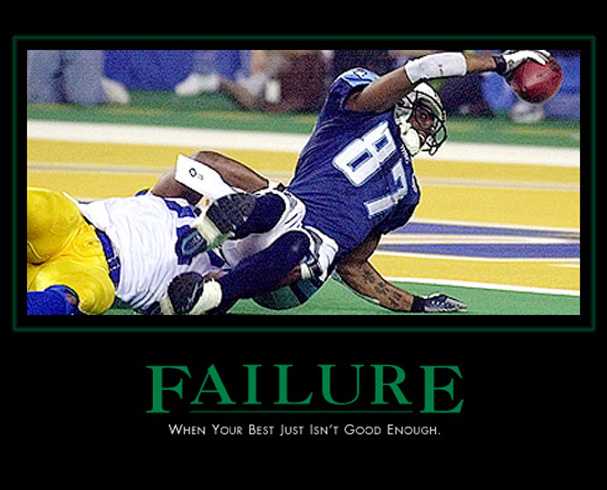
One of most popular trends on teh internets as of late is the emergence of failure as a humorous concept. No doubt most internauts have stumbled upon pictures such as the one shown below.


This fresh idea has been elaborated by adding additional words to the 'Fail' text, expliciting what the Fail is all about. Like we can't figure it out ourselves. But y'know these days even complete moarans roam teh internets so I figure it's a good thing for them. Examples:


This fad is becoming more and more popular. As is the case with most things or people becoming overly popular, it gets a bit tiresome after a while. That's why I took the liberty of posting some non-Fail pictures as well.


I like this one in particular:


Of course, a picture post is never complete without an insane Japanese pic. And to think they actually sell the item depicted in the pic below...


Of course, for all your Fail-need, the ultimate website is the world-famous Failblog. There are many others like it though, like Shipment of Fail for starters.

Wednesday, December 10, 2008

My attempt at writing a newspaper article

Mijn opdracht bestond uit een bericht te schrijven over een onderwerp dat me enorm interesseert. Vanzelfsprekend denk ik dan meteen aan mensenrechten en verwante zaken. Ik zag dat er net een rapport over schendingen in Somalië was gepubliceerd op de site van Human Rights Watch, een organisatie die ik enorm waardeer. And so I gave it a shot, here goes nothing!


Ook westerse landen gaan volgens Human Rights Watch niet vrijuit

Oorlogsmisdaden treffen vooral Somalische bevolking

NAIROBI ● Alle partijen in het gewapende conflict in Somalië bezondigen zich aan oorlogsmisdaden en andere ernstige misbruiken. Bovendien verergeren de VS en Europa de crisis door middel van een mislukt beleid. Dat schrijft de Amerikaanse mensenrechtenorganisatie Human Rights Watch in een nieuw rapport.


Human Rights Watch stelt vast dat zowel de Somalische Federale Overgangsregering (SFO), hun Ethiopische bondgenoten als de opstandelingen systematisch oorlogsmisdaden hebben begaan sinds het conflict begin 2007 escaleerde. Meestal ging het om lukrake bombardementen op burgers, moord, verkrachting, plundering en het gebruik van burgers als menselijk schild. Hierdoor kijkt Somalië na twee jaar oorlogsgeweld aan tegen een humanitaire ramp: minstens 870.000 inwoners van de hoofdstad Mogadishu zijn op de vlucht voor het geweld, terwijl in het centrum van Zuid-Somalië 1,1 miljoen burgers hun huizen ontvlucht zijn.

Duizenden Somali proberen elke maand de Keniaanse grens over te steken waar ze terechtkomen in ellendige vluchtelingenkampen. De Dabaab-kampen in noordoost-Kenia met een populatie tot 250.000 mensen zijn intussen de grootste ter wereld. Honderden Somali verdronken dit jaar al in wanhopige pogingen om Jemen per boot te bereiken via de Golf van Aden. Tenslotte becijferden humanitaire organisaties dat meer dan 40% van de bevolking in zuid-Somalië tegen het einde van dit jaar afhankelijk wordt van buitenlandse hulp.

“De partijen hebben meer schade toegebracht aan burgers dan aan elkaar”, zegt Georgette Gagnon, directeur Afrika bij Human Rights Watch. Opstandelingen van de Unie van Islamitische Rechtbanken vuren vaak mortieren af vanuit dichtbevolkte wijken. Ethiopische troepen reageren daar systematisch op met zware artillerie-aanvallen zonder veel om te kijken naar de burgerbevolking. Volgens het rapport is willekeurig raketvuur door Ethiopische soldaten het standaard militair beleid.

Veiligheidsdiensten van de SFO martelen gevangenen, plunderen woningen, vermoorden en verkrachten hun eigen burgers -- soms tijdens gezamenlijke acties met hun Ethiopische bondgenoten. Zo getuigt een jongeman dat hij werd vastgehouden in zijn woning terwijl zijn moeder en zussen voor zijn ogen werden verkracht door Ethiopische soldaten. Opstandelingen bedreigen en vermoorden burgers die volgens hen de tegenpartij steunen. Volwassenen maar ook kinderen worden onder dwang gerekruteerd in het leger van de rebellen.

Het leeuwendeel van de vluchtelingen die te arm zijn om Mogadishu te ontvluchten, verzamelen zich in kampen op de weg naar Afgooye. Maar milities die gebruik maken van de wetteloosheid beroven en verkrachten de weerloze vluchtelingen zelfs tot aan de grens met buurland Kenia. Dat land heeft ondertussen de grens gesloten vanwege de grote vluchtelingenstroom, waardoor mensen overgeleverd zijn aan louche smokkelaars en corrupte Keniaanse agenten.

Tijdens het onderzoek interviewde Human Rights Watch 80 slachtoffers en ooggetuigen. Ook informeerden ze onder meer bij diplomaten, humanitaire medewerkers, journalisten waarvan sommigen getuige waren van de schendingen, ambtenaren van de SFO waaronder eerste minister Nur Hasasan Hussein en vele andere betrokkenen. Toch verwerpt de Ethiopische regering het rapport als politiek geïnspireerd en “zeer gebrekkig”. In een reactie verklaart woordvoerder Wahde Belay dat “bijna alle misdaden in het rapport door al-Shabaab begaan werden”. Al-Shabaab is de militaire tak van de Unie van Islamitische Rechtbanken.

Volgens de hoofdauteur van het rapport, Chris Albin-Lackey, hoeven de Ethiopische soldaten geen verantwoording voor eventuele schendingen af te leggen. Dit is deels te danken aan de Verenigde Staten, die het conflict vooral in het kader van de ‘War on Terror’ beschouwen. Hun onvoorwaardelijke steun aan de SFO en de Ethiopië zorgt ervoor dat geen van beiden rekenschap moet afleggen. Ook de Europese Commissie sprak haar steun uit aan de SFO zonder voorwaarden wat betreft misbruiken. Deze houding stimuleert de mensenrechtenschendingen en bevordert net het extremisme dat de mogendheden willen indammen, aldus Albin-Lackey.

Het rapport verscheen op dezelfde dag dat de Europese Unie operatie-Atalanta van start liet gaan. Minstens acht landen onder leiding van de Britse vice-admiraal Philip Jones gaan de piraterij te lijf in de Golf van Aden: Duitsland, België, Spanje, Frankrijk, Griekenland, Nederland, Groot-Brittanië, Zweden en mogelijk Portugal gaan onder VN-mandaat schepen van het Wereldvoedselprogramma begeleiden met humanitaire hulp voor Somalië. Hoge vertegenwoordiger van de EU Javier Solana verklaarde dat de missie een “krachtig mandaat” krijgt.

Bovendien roept het rapport op tot een nieuw internationaal beleid ten aanzien van Somalië, dat breekt met de mislukte pogingen voordien. Er moet onder meer een onafhankelijke VN-commissie opgericht worden en er moet vooral meer diplomatieke druk uitgeoefend worden op de strijdende partijen. Woensdag gaat in de Keniaanse hoofdstad Nairobi een tweedaagse internationale topconferentie van start om de Somalische piraterij in de Golf van Aden te bespreken. Ould-Abdallah, VN-afgevaardigde van Somalië benadrukt in het licht van die conferentie dat “piraterij onlosmakelijk verbonden is met de veiligheid en stabiliteit in de Somalië zelf”. Hij hoopt ook dat de conferentie meer samenwerking tussen landen, regionale en internationale organisaties teweegbrengt, zodat beide problemen tegelijk kunnen opgelost worden.

Sunday, November 30, 2008

The refined art of killing thyself

This summary is not available. Please click here to view the post.

Friday, November 21, 2008

Timeline of Lehman Brothers' collapse


A Canadian that worked for Lehman Brothers in the past received this timeline via e-mail. It was drafted by a team of insiders and then forwarded to the rest of the employees. It's not really confidential, but it puts forward several interesting points. The Canuck, a software programmer, then passed it on to me on a board I am used to frequent.

Of course I myself prefer to muse my time with other useful activities such as dating Mrs palm and her five lovely daughters, playing repetitive generic games or sleeping. But I'm sure some people will find this excerpt interesting enough.

Here it goes:

• Some German immigrants open up a general store. The economy hits a rough patch and they are paid in cotton. They enter the cotton trade since they had an abundance of the resource and decide that trading in futures is much more profitable than running a general store. The investment firm keeps the same name as the general store, Lehman Brothers. Investment banking moves away from trading and into advisory roles such as M&A, debt syndication and equity offerings. However, trading operations remain a profitable side business.
• 1933 The Glass-Steagall act ensures the separation of Banks and Investment Banks to avoid conflicts of interest. This act was actually passed to help “prevent the next great depression”
• May 1, 1975, fixed commissions for trading securities are abolished. This forces investment banks to find new models since the traditional “tell people what to buy or sell and then charge them for the trade” model quickly loses all value as commissions went down to nothing fairly rapidly.
• Early 1980s, Salomon Brothers’ Capital Markets group shows the rest of Wall Street that a trading desk can generate HUGE amounts of money by selling people products they don’t need and can’t possibly understand. Other Wall Street firms follow suit. For some history here, see Liar’s Poker. Salomon created many of the instruments you hear about on the news now, including the modern MBS and CDO industries.
• 80’s and 90’s - Proprietary desks, trading desks that make ‘educated’ bets on the direction a market will take instead of the traditional market neutral stance of conventional trading desks, gain more power and latitude within the investment banking corporate structure. Given the absurd bonus rules, Prop traders often make tons of money on bonuses.
• 1994, Lehman Brothers is spun off as a public company from its previous parent, American Express. This offers Lehman a new source of capital and lowers its WACC (weighted average cost of capital) that most firms use to determine the feasibility of new projects. This event created the Lehman we knew and loved.
• Late 90’s, early 00’s - Financial Innovation and low interest rates following the burst of the tech bubble allows for increased access to loans and poor lending practices. Credit rating agencies drop the ball when evaluating the quality of the new mortgage backed securities. Everyone thinks “the investments will never go bad because house prices can only go up.”
• In 2004, the SEC provides Lehman and other investment banks with an exemption to quadruple their leverage ratios. This means Lehman can move from 10 times leverage up to as much as 40 times in some cases. In other words, for every hundred dollars that Lehman bets, they are controlling as much as 4000 dollars. When the investment goes bad, Lehman is out 4K instead of just 100.
• 2000’s - Traders at Lehman Brothers rack up large positions in mortgage backed securities. Some of these are due to underwriting activities (Lehman’s fixed income business creates these MBSs for a nominal fee and cannot always sell it off right away, other times traders actually purchase the things to make a profit).
• 2006, executives at well-run investment banks warn senior management of the toxic nature of mortgage backed securities and other complex derivatives. These firms lower their exposure to such assets. JPMorgan’s voice of reason, Jamie Dimon, now serves as the firm’s CEO. He de-leverages JP Morgan while still “enabling” the other investment banks by providing counter party and CDS services. Basically, he bets on the other investment banks failing (with a CDS position) while controlling their money through counter-party and repo trades.
• March 2008, Bear Stearns sells to JPM while on the brink of bankruptcy.
• Merrill Lynch sells toxic mortgage backed securities at 20 cents on the dollar, providing the financing to Loan Star funds (the purchaser, a Texas based private equity group) with clauses that provide downside protection on the sale all the way to 4 cents on the dollar. In other words, Merrill sells the assets at 20 cents and then provides “insurance” in case the value drops lower. This model is no different than companies like Lehman selling a CDO and then providing a CDS in case the underlying asset defaults. Think of it as being self-insured without a cash reserve to cover insurance needs.
• Lehman chairman Dick Fuld gets into fight with notorious short seller David Einhorn blaming short selling for causing fear about capital markets and basically driving companies out of business.
• Early Sept 2008 - Lehman debt placement is cancelled. In other words, Lehman stops trying to borrow more capital because such borrowing requires a degree of financial disclosure that would show how bad of shape Lehman is in. Talks with a South Korean bank over a purchase break down when a price could not be agreed upon with CEO Dick Fuld.
• Early Sept 2008 - The market shows concern that Lehman will post a large quarterly loss. The Merrill Lynch ABS sale causes the market to question Lehman’s own solvency (we are way past liquidity issues at this point). These things can cause a downward spiral. Lehman’s credit rating is tightly coupled with its ability to generate new funds when needed. This is one of the benefits of a public company, you could always issue more stock. If the price of the stock goes down considerably, your ability to generate new cash is crippled. This will increase your likelihood of defaulting on your debt, which will decrease your credit rating. Credit rating agencies Moody’s and S&P are suddenly on the ball. The threat of a decreased credit rating decreases Lehman’s stock further as it would result in higher margin requirements on Lehman’s loans. Since Lehman is leveraged around 30x at this point, this would be devastating. There is no way Lehman could pony up this kind of cash.
• Tuesday Sept 9th - Lehman posts its first quarterly loss since becoming a public company. Dick Fuld (Lehman CEO) identifies his plan to sell the Investment Management Division. Talk proves to be rather cheap; the market is demanding Lehman shore up its books yesterday.
• Sept 10-12 - Market continues to hammer LEH stock.
• Sept 13th - Paulson, Bernanke, and the CEOs of all the major Wall Street firms meet in a downtown NY Fed building to discuss possible resolutions over the September 13th weekend. Group acquisition, single firm acquisition with downside protection from the treasury (similar to the BSC deal), full scale government bailout, and bankruptcy are all evaluated.
• Sept 13th & 14th - Over this same weekend, AIG discloses possible bankruptcy to the fed, removing its focus on Lehman as AIG is a much bigger fish to fry. Bank of America and Barclays are the most likely suitors for a Lehman takeover. Coincidentally, they are also the only interested parties. Barclays does not feel comfortable purchasing Lehman without proper due diligence and without Federal (i.e. “no risk”) downside protection on toxic securities owned by LEH. Barclay’s basically wants a Bear Sterns style deal but the Fed says no. Barclays pulls out of the deal. John Thain, CEO of Merrill Lynch, realizes that his firm could be next. Mr. Thain steps away from the meeting and calls Bank of America directly and proposes that they purchase MER instead of LEH. BofA backs out of the Lehman deal. Keneth D. Lewis, CEO of Bank of America, announces the acquisition of MER on Sunday evening. Robert Diamond, CEO of Barclays, asks Dick Fuld if a deal could be struck after Lehman files for bankruptcy in order for him to avoid purchasing the bad debt on Lehman’s books. He receives a positive response.
• Sept 15th - Monday morning Lehman files for bankruptcy.
• Sept 16th - Tuesday Robert Diamond announces that Barclays will be purchasing Lehman’s North American operations, without any of the toxic assets. The Brits are up in arms because before the end day Friday, Lehman moved $8 Billion out of their London office and into NY. This allowed them to pay the US salaries but not their London ones.
• Sept 17th -The Fed loans AIG $85 Billion and receives warrants that, when executed, will give the Fed a 79.9% stake in the insurance company.
• Sept 18th - Thursday, Secretary of the Treasury Paulson and Ben Bernanke announce a $700 Billion recovery plan to cure the rest of Wall Street’s issues. They also announce they will be fixing Tom Brady’s left knee.
• Sept 18th - A plan to ban short-selling is put in place. Coupled with the socialization of the financial world mentioned in the previous point, capitalism is officially dead. Long live the USSA.
• Sept 22nd - The following week Nomura purchases Lehman’s Asian operation and is in discussions to purchase its European operation.
• Late Sept/Oct – Lehman’s Investment Management Division, centered on Neuberger Berman, is bought by a private equity firm.
• Congress continues to fight with Paulson & Co. over the announced deals. Not a single side is discussing the important questions. Layth is furious

Monday, October 20, 2008

The demise of the EU, or a new opportunity? Part Deux


Let me rephrase my views like this.


“The bureaucracy is expanding, to meet the needs of the expanding bureaucracy”. This quote by Oscar Wilde remains a truism amongst many opponents of increased integration in the European Union. Certainly, with the batch of new Eastern member states that statement rings true all the more. Twenty seven states are now seeking to maximize their self-interest. From a less pessimistic point of view these states could be seen to join forces in order to assert a competitive position in a global environment at a time when European influence is often dubbed as ‘a waning economic giant’ or ‘a soft power’ at best. An important question is whether or not the increasing bureaucracy and malfunctioning of the EU is caused exactly by those anti-integrationist forces. After the UK failed to establish the industrial policy domain in which the nation would gain significantly by entering the EU, a powerful critique of further EU integration was born. Hence the famously quoted Margaret ‘I want my money back’ Thatcher during the debate on budget rebate and the genuine enmity towards the union of many UK citizens. A few decades later the EU is still struggling with integrationists willing to take the initiative towards a unified union, and opponents with an opposite agenda. However, recent events have proved that a new orientation for the EU is essential if a relapse towards traditional power politics and unilateral policy is to be avoided.

Scrutinizing the efficiency of the EU presents us with a paradox. Advocates of the intergovernmental cooperation model often reject an integrationist approach because the EU is becoming too large, or that it has too little decisiveness. They claim it’s not able to speak out with a strong voice, thus weakening the position of the EU and their respective countries. Therefore it needs to be reduced to a mainly economic partnership that is preferably based on intergovernmental decision making. The first difficulty with this stance is the problem of two-level games whereby country representatives sitting around the international table can’t agree with a rational proposal from an international point of view because it would be impolitic on the domestic level, or vice versa. Secondly, because a large and cultural differing union always has divergent interests the preference for intergovernmental decision-making is evidently a serious drawback in negotiations that require swift and resolute action. It seems that the failings attributed to the EU are precisely caused by the lack of change in the EU.

Let us take a look at why France and The Netherlands voted against the so called EU constitution in 2005. It was partly rejected because of domestic dislike towards the parties supporting the constitution. More importantly however, the EU was widely portrayed as undemocratic, and sovereignty would be lost to a nondescript European Union. The truth is that same constitution would increase the democratic character of the EU, and the decrease of sovereignty was nothing near incorporation into a new state despite the many claims by anti-constitution advocates that their country would become irrelevant.

Meanwhile in the financial crisis the Commission and Barroso have appeared weak and feeble-minded. The President neglected to launch a ‘European initiative’ to revive the collapsing financial system. Nonetheless it is Barroso’s job to act in the Union’s interest and to promote European ‘significance’. In short: the Commission needs to formulate new ideas. Closer examination reveals that Barroso didn’t propose the foundation of a European financial supervisor because the larger European member states disapproved. These countries aren’t too keen on losing tight control over their financial institutions. We now get down to the very root of the issue. The President of the Commission is appointed by the Council composed of state leaders so Barroso is directly dependent on the Council for his reappointment. To what extent can he operate independently? Recent events point out that when it boils down to core issues, it’s still the member state governments who call the shots. Despite the changes implemented since the Maastricht Treaty governments still carry much of the weight as has been demonstrated clearly during the current crisis.

In turn, this process fuels the people who fail to see the value of a more politically unified Europe: as the EU doesn’t take action to solve the crisis, it’s the member states who are required to act on their own. Again this is simply due to the fact that the EU doesn’t get the necessary tools to deal with the problem. The European Central Bank’s most important role is the containment of inflation. It was not conceived to possess jurisdiction over the banking system. It cannot prevent any abuse or disaster from happening whatsoever. This reduces the ECB to an institution that merely patches up imbalances regarding monetary issues. Thus the EU lacks an authoritative voice in financial and monetary matters as much as in the more commonly known 2nd and 3rd pillar judicial and foreign policy domains. Granted, a country like Germany supported an ECB with inflation regulatory powers only because Germany as the largest net contributor by far would bear most of the costs without having much control over her money. Still, the current financial crisis bitterly illustrates the weakness of a union of which the member states refuse to hand over their sovereignty.

The Irish refusal of the Lisbon Treaty in June now gets a whole new dimension. The patchwork that the Lisbon Treaty provides would not solve the problems mentioned above. It would only prepare the EU to remain viable with the introduction of the new eastern member states. Some people voice the opinion that it’s best not to ratify the Treaty since a successor to it will not be compiled for a very long time. Work on a treaty with better provisions should be started instead. One problem there is that the apparent problems have been latently present for a long time. The more they rise to the surface, the more disapproval will be created towards the EU. Ratification of a more ‘integrationist’ treaty would then become even harder than it already was.

This brings us to an essential point. Sovereignty needs to be redefined. The twentieth century has time and time again proven the failure of traditional power politics. Richard Perle, an influential political advisor in the US points out the following: “I do not believe that the United States should be bound by the same rules as the smallest African nation. Life isn't like that”. For years the United States have indeed denounced the same rules that bind the international world. As long as this fundamentally unjust basic assumption defines international policy worldwide, more integration will be impossible. America’s reputation is tarnished, and its influence around the world is slowly waning. Clinging onto power and pursuing self-interest at the expense of others as the essential criterion is counterproductive in the long run. Europeans would do well to bear in mind this conclusion when they belittle the importance of the EU.

A tentative alternative could be that a common ground for a Europe at divergent speeds could be established, in which the Eurogroup takes the initiative towards the European future. These countries would constitute the avant-garde, as opposed to countries like the UK who have been sceptical throughout the years of her membership. Efforts in this direction have been made previously, notably by former Belgian prime minister Guy Verhofstadt. However, in general there had formerly been little enthusiasm for this divergent but unified Europe. Chairman Jean-Claude Juncker of the Eurogroup admitted earlier this year that several of his Eurogroup members didn’t desire any more political unification. In the current situation then, when leaders surely contemplate the lack of decisiveness, this concept might very well find broad support after all. Bernard Bulcke of De Standaard nailed it perfectly when he said that “not so much the inspired thinkers, but crises have always been the engine of European integration”. With the right mindset employed by political leaders in Europe, the crisis could be pivotal for a new direction of the EU after all.

Monday, October 13, 2008

The demise of the EU, or a new opportunity?


The raging financial crisis has plunged the world economy into a likely recession. Just as importantly, it has revealed several striking problems of the current EU’s functioning.

The European Central Bank’s most important role is the containment of inflation. It was not conceived to possess jurisdiction over the banking system. It cannot prevent any abuse or disaster from happening whatsoever. This reduces the ECB to an institution that merely patches up imbalances regarding monetary issues. Thus the EU lacks an authoritative voice in financial and monetary matters as much as in the more commonly known political and foreign policy domains. The current financial crisis illustrates the weakness of a union of which the member states refuse to hand over sovereignty.

The political battle between integrationists and those who oppose it has been a constant feature of EU politics for many years. The former claim the union should streamline its institutions by vesting more power onto the parliament and through the abolishment of unanimous voting in the council. They adhere to these measures on the ground that the union should be granted a stronger and more democratic voice when handling an issue, in order to increase efficiency and democratic credibility while lessening the bureaucracy involved in policy making. Opponents rightly state these changes would harm sovereign power of national states. What’s more is that cultural diversity in a union having attained 27 member states is far too great to be ruled by a politically unified institution. In reality however, the reasons for adopting an integrationist approach or not are often related to past events, country size, cultural, economical, political and even religious predispositions of particular countries or politicians.

A joint reaction from EU states to bail out victims of the crisis is unlikely because banking systems throughout Europe remain different. Countries with a sound banking climate don’t wish to pay for those who lack a proper banking system. In the same vein Germany as the (by far) greatest net contributor to the EU budget is not inclined to acknowledge a broad European plan including the injection of capital in the system as a whole instead of the individual banks. This plan means Germany would bear much of the costs without having control over its money. The same motivation was voiced by Germany when it supported a ECB with inflation regulatory powers only. If the traditionally more integrationist Germans side with the UK, as evidenced in the emergency meeting between the European Union’s four biggest economies this Friday, the end of a unified Europe seems very near.

If a sound centralized financial policy was neglected when the euro was introduced, the acquisition of European banks by other European banks now may prove to do just that. Only recently BNP Paribas bought Fortis, the largest Belgian bank that suffered dramatically in this crisis. The arrival of such pan-European banks could mark a concerted and centralized control over the banking system.

Despite the critique on the ECB, it remains the strongest EU institution in this crisis. For conclusive results an additional effort is necessary. The monetary union should coexist with a true political union. The latter needs to form a counterpoise with the ECB. That is why the summit of the Eurosummit on Sunday is crucial. A common ground for a Europe at divergent speeds could be established, in which the Eurogroup takes the initiative towards the European future by. These countries would constitute the avant-garde, as opposed to countries like the UK that has been sceptical throughout the years of its membership.

Formerly there had been little enthusiasm for this divergent but unified Europe, since several Eurogroup members even didn’t wish for more political unification. In the current situation, when leaders contemplate the lack of decisiveness, this concept might very well ring true after all. Bernard Bulcke, commentator of De Standaard, nailed it perfectly when he said that ‘not so much the inspired thinkers, but crises have always been the engine of European integration’.

In the end this may be an opportunity for a better functioning of the EU after all.


[Note that I wrote this on Sunday 12th of october, before the results of the summit were published in the media]

De enige en onweerlegbare waarheid rond Louis De Cordier en dr. Geryl's expeditie in Hawara onthuld door PI BEYS!


Donderdag 9 oktober werd op het weelderige domein van de Isel foundation naar tweemaandelijkse gewoonte een receptie gehouden ter ere van de publicatie van de nieuwste editie van het kunstblad Isel. Een blik op de cover leerde mij dat de redactie een artikel had gewijd aan ene zekere Louis De Cordier, ons allemaal welbekend dankzij de reportage van Knack eind augustus. En wie zou er naast een horde parmantig opgetutte taarten uit de high society en enkele wanhopig naar sponsors zoekende kunstenaars op die happening opdagen? De Cordier in eigen persoon, en dan nog vergezeld van zijn kompaan dr. Geryl!

Een uitgelezen kans om de twee illustere figuren te observeren, luistervinken, ja zelfs een kruisverhoor af te leggen. Aldus trok ik een vers hemd en degelijke vest aan en zette ik m’n pseudo-hippe bril aan om de ware aard van hun bedoelingen te ontdekken.

Eenmaal aangekomen bleek mijn vooringenomenheid te beantwoorden aan het klassieke cliché van de kunstwereld: een weelde aan totaal overprijsde maar vooral onbegrijpelijke kunstobjecten was te bezichtigen voor het publiek. Dat bestond zoals vermoed voor een groot stuk uit cultureel aangelegde vrouwen die duidelijk hun echtgenoten hadden meegesleurd naar deze sociale gebeurtenis. Want zoals de meeste recepties was dat vooral de teneur. Netwerken en small-talk uitkramen zonder een echt zinnig gesprek te hebben is nu eenmaal des mens.

Na enkele glaasjes champagne geserveerd door enkele (overigens vrij aantrekkelijke) jonge serveersters begaf ik mij naar De Cordiers kamer, die volledig gedomineerd werd door een in het licht badende Golden Sun Disk. Uiteindelijk lukte het me om hem te strikken voor enkele vraagjes. Hoewel vraagjes… Mezelf voorstellen als iemand die archeologie gestudeerd had was al genoeg om hem in een spraakwaterval om te toveren.

De algemeenheden die hij te verkondigen had zijn bekend dus die zal ik maar overslagen. Het begon interessanter te worden toen hij zei dat hij geïnspireerd is door kosmische radiogolven, en dat die in feite zijn hele carrière en bij elk werk van zijn hand van belang zijn. Een kijkje op www.louisdecordier.be kan dat misschien verduidelijken. Het is zo dat zijn kunst steevast een functionele kant moet hebben. Zonder daar teveel op in te gaan wil ik enkel vermelden dat het project in Hawara aansloot bij zijn kosmische theorieën dankzij het geofysisch onderzoek, die als het ware een link vormde tussen zijn interesse in de fysische wetenschap en zijn passie voor mythische of eerder mysterieuze oude culturen. Hij gaf openlijk toe dat het project en de bezigheid an sich de feitelijke prioriteit hadden. Het resultaat van de scans is in zekere zin een bijkomstigheid dat in mindere mate bijdraagt tot het geheel. Dit standpunt blijkt dan ook uit zijn verklaring dat het meegenomen is als er iets onder de plaat ligt; maar is dat niet het geval: tant pis. Ik kreeg de indruk dat hij dus zelf niet helemaal overtuigd was. Dat hoorde ik ook al toen hij eens op StuBru een radio-interview gaf aan Siska Schoeters. Al was het gesprek dankzij de bedroevende bijdrage van Siska helaas van weinig belang (don’t ask), toch zei hij dat hij zelf een beetje verrast was rond de commotie errond en dat het nogal ‘snel’ ging. Mijn punt is: het resultaat dient voor hem als het ware de methode, terwijl archeologen het weleens andersom durven te zien.

Soit, hij had zich wel wat in de kwestie verdiept, naar zijn zeggen was hij er al een tweetal jaar mee bezig. Alleszins meer dan ik (en dat mag ook wel!), want hij wist wel een aantal aannemelijke feiten te vertellen. Mijn nekharen rezen echter ten berge toen hij begon over het belang en der herkomst van het labyrint. Niet toevallig ook een van de meer onsamenhangende episodes uit zijn betoog.

Hij beweerde dus dat de kennis die uit het labyrint zou gehaald kunnen worden afkomstig is van een beschaving van voor de laatste ijstijd, waar geen sporen meer van te vinden zijn. Leek me nogal vreemd dat er van een ontwikkelde beschaving geen sporen meer zouden te vinden zijn, terwijl er genoeg prehistorische vondsten uit de pre-ijstijd bekend zijn, maar goed. De astronomische kennis van de Egyptenaren zou dus aan hen te wijten zijn, die delen van hun kennis zouden verspreid hebben en op de een of andere wijze bij de Nijlbewoners terecht zijn gekomen. Het geloof daarin had hij dus van de befaamde dr. Geryl en ik geloof dat hij hem echt bewonderde. Hij deed er alleszins nogal lyrisch over. Daarom ging ik eens met de man praten.

Een vrij antipathieke en nogal wereldvreemde kerel to say the least. Toen ik hem vroeg in welke mate hij samenwerkte met De Cordier en wie het project echt in handen heeft zei hij: helemaal, wij doen en bespreken alles samen. Toen wist ik al een beetje hoe laat het was natuurlijk. Toch zijn de beweegredenen van de twee niet helemaal hetzelfde. De Cordier is vooral in de zoektocht en zijn kunst geïnteresseerd. Hij is volgens mij oprecht, en heeft denk ik geen verkeerde bedoelingen. Het kan best zijn dat het geofysisch onderzoek iets oplevert. Ik neem wel aan dat die Egyptenaren wel degelijk onderzoek doen. Die Geryl daarentegen. Holy ****. Die vent is enkel geïnteresseerd om zijn etherisch gewauwel meer kracht bij te zetten door zijn end-of-time theorieën te spijzen.

Wat blijkt nu? Ze willen het water wegpompen, en dan een proefsleuf trekken om een kijkje te nemen, maar daar is geld voor nodig. Het geld van de voorbije expeditie - een € 40 000 - is geheel opgesoupeerd. Daarom hebben ze sponsors nodig, want je kan niet altijd een stel Sun Disks verkopen als je in geldnood zit. Ze moeten dus flink wat media aandacht krijgen om die sponsors aan te trekken. Volgens Geryl is dat in eerste instantie de Egyptische overheid of dienst voor archeologie, enfin iets van die strekking, en wellicht ook giften van private personen, UNESCO en what not. Daar begint bij mij een belletje te rinkelen, want zonder een grootse ontdekking zouden ze wellicht geen geld kunnen rapen voor verder onderzoek. Vooral omdat op de site www.mataha.org nog altijd geen scans te zien zijn. Het is in dat opzicht wel bizar dat De Cordier stelde dat die op de site stonden, en dat Geryl dacht dat die er wel opstonden, maar dat hij het niet zeker wist (qué?!!).

Omdat het resultaat van hun eerdere scans te korrelig is moeten ze een tweede scan uitvoeren en het water wegpompen. Is het resultaat gewoon te wazig om zekerheid te hebben? We weten het niet want ze worden niet gepubliceerd. Waarom?

The shit really gets crazy als Geryl begint over zijn geofysische scan van het Giza plateau in 2006. Hij werkte samen met een team Polen en de Egyptenaren van NRIAG. Volgens de goede man had hij het graf van Cheops gevonden. Welteverstaan, het 2de graf van Cheops, het echte dus. Blijkbaar was die grafkamer van behoorlijke afmetingen. Hij zei iets van een 20 meter breed en 30 meter hoog, wat geenszins klein bier is. Ik vroeg hem daarop wanneer of waar dat gepubliceerd was, want daar had ik niks van gehoord. Hij vervolgde dat die specifieke vondst niet gepubliceerd was dankzij ruzie tussen de Polen de Egyptenaren van het NRIAG (een algemeen onderzoek zelf is wel door NRIAG gepubliceerd, maar de site ligt plat momenteel). De polen hadden namelijk bij hun terugkomst in eigen land gelekt over het onderzoek (wel niets van gehoord maar kom) voordat het in Egypte was gepubliceerd, en dat zou blijkbaar de kop kunnen kosten van niemand minder dan… dr. Abbas. Daarom kan het niet gepubliceerd worden, want niemand wil zijn kop zien rollen. Dit belet hem niet om in 2008 weer met Abbas samen te werken. Uiteraard. Maar hoera ende jochei, er is een oplossing! Het zou wel kunnen gepubliceerd worden door een nieuw onderzoek te doen! Nu wil het toeval dat in Hawara een project loopt waar veel centjes en street cred in de hoods of Egyptian archaeology kan verworven worden. Een samenloop van omstandigheden? I don’t think so. Geryl kent naar eigen zeggen De Cordier al anderhalf jaar, terwijl De Cordier al een tweetal jaar onderzoek deed. Geryl heeft de kunstenaar ook geintroduceerd bij zijn makkers bij NRIAG, en heeft hem ook mals gemaakt voor zijn fantastische theorieën, die nu eenmaal makkelijk ingang vonden bij een kerel die een interesse had in oude culturen, mythes, raadsels en het onbekende. Uit de manier waarop De Cordier naar hem verwees dacht ik instinctmatig dat Geryl hem in zijne zak had. Ik geloof echt dat Geryl in hem een werktuig ziet voor zijn eigen doeleinden.

Om te eindigen: hij was er zeker van dat hij het had gevonden in giza, maarja, hoe kunt men zeker zijn met een GPR scan? Enfin, de site van NRIAG waar het rapport op staat is down momenteel, maar op andere sites met interviews staat niets echt dat op bewijs lijkt, en de Polen hebben geen toestemming gekregen om opgravingen te doen wat misschien al aan teken aan de wand is. Eventueel was dat onderzoek niet wat hij uiteindelijk voor ogen had, want toen al zei hij dat zijn doel - de heilige kennis - in het labyrint te vinden was, en daar heeft hij een uiterst geschikte pion voor gevonden: De Cordier.

Ps: Geryl geloofde echt wat hij zei. Ik kan dat wel appreciëren, maar ik voelde toch een soort onbehagen van zijnentwege toen ik hem bepaalde vragen begon te stellen. Op het einde wou hij er toch vanaf zijn… Ik vraag me alleszins af hoe hij zou reageren als uiteindelijk blijkt dat de feiten hun theorieën niet staven. Ik heb zo’n vermoeden dat het bij zijn scan in giza het geval was, en dat hij er niet al teveel in detail wou over vertellen tegen een non-believer zoals ik. Gelukkig waren er genoeg dametjes en ‘belangrijke’ mensen die nietsvermoedend en vol beate verwondering konden opkijken naar het ego van de Belgische redder des vaderlands… binnen vier jaar toch, als we allemaal dingen naar een plaatsje in zijn Peruviaanse bunker.